Discover Åland’s Historic Beer & Champagne Treasures
On Åland, people have been brewing beer for household needs for centuries, but it wasn’t until 2004 that commercial beer production began with the founding of Stallhagen brewery. Today, they proudly boast a true rarity – a shipwreck beer from the 19th century that was discovered in the Åland archipelago, along with bottles of champagne from the same era.
The foundation of beer is malt, hops, water, and yeast. In brewing circles, they often say that brewing beer is easy, but brewing great beer is much harder. The ingredients may seem simple, but the brewing process has several stages, each requiring a certain level of skill and precision. At Stallhagen brewery, beer is brewed with great respect for both the ingredients and the process. Good beer takes the time it needs.
Local and Better
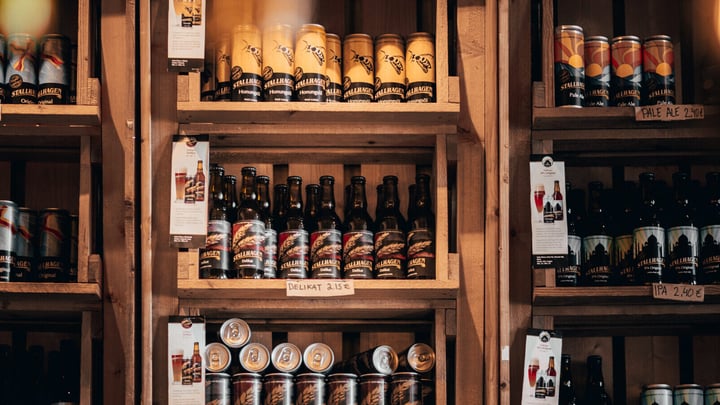
In 2005, Stallhagen produced around 20,000 litres of beer. In 2018, they opened a new, modern brewery, which increased their production capacity to 2.5 million litres per year. Today, the brewery’s ten or so different beers are the obvious choice at Åland’s restaurants and have earned their spot on the local supermarket shelves. Their slogan “Drink less, drink better” perfectly sums up the Åland’s approach to food and drink culture, which values and emphasises locally produced goods. Did you know that Stallhagen's fresh, malty honey beer gets its distinctive flavour solely from real Åland honey?
Guided Tours at Stallhagen
At the Stallhagen brewery, you can join a guided tour and learn about the brewing process, the ingredients, traditions, history, and trends in beer-making. You can also visit the brewery's farm shop, located in the same building, to pick up some beer to take home. During the tour, you’ll also have the chance to taste different types of beer in the cosy Pub Stallhagen and learn about beer and food pairings, offering new and exciting flavour experiences. Sometimes, you might even get to try a new beer that hasn’t been released yet!
The World’s Oldest Beer Recreated
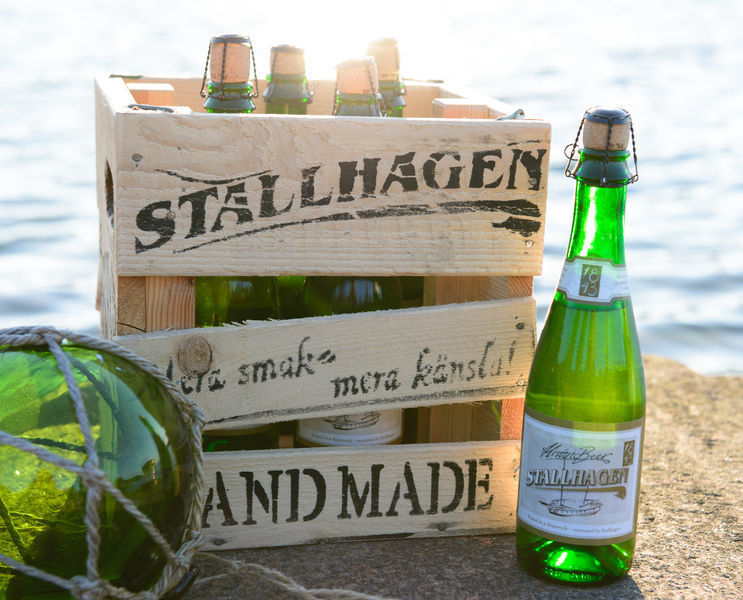
On Åland, you can truly discover treasures – both old and new. In the summer of 2010, an intriguing shipwreck was found near Föglö in Åland’s outer archipelago. The ship, believed to have sunk in the 1840s, contained beer and champagne in its cargo. Five bottles of beer were salvaged from the wreck, and the Åland Government, which owns the wreck and its contents, gave Stallhagen the right to recreate the historic beer.
The bottles, which had been lying 50 metres deep at the bottom of the sea for around 170 years, were analysed by the Technical Research Centre in Finland (VTT). Stallhagen’s brewmaster led the development process, based on these analyses and tests, with brewing and tasting panels in collaboration with researchers from Finland and Belgium.
It turned out that the cargo included three different types of beer – two golden and clear, and one with a darker and coppery tone. The chemical analyses suggested that at least one of the beers would have had a distinctive fresh character of rose, almond, and clove when freshly brewed. Based on the research results, Stallhagen created an authentic replica of one of the beers from the wreck, named Stallhagen Historic Beer 1842. This was followed by the development of a new, improved version of the shipwreck beer, named Historic Beer 1843.
The World’s Oldest Champagne Discovered
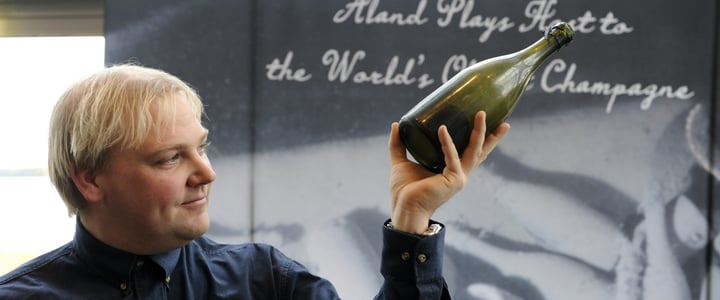
In addition to beer bottles, the Föglö shipwreck also contained 145 bottles of champagne, dating back to the 19th century. Thanks to the constant temperature of four to six degrees, the dark surroundings, and the pressure both inside the bottles and from the sea, the champagne was remarkably well-preserved. Each bottle was re-corked, tasted, and classified by international champagne expert Richard Juhlin.
The first bottle brought up from the wreck was also tasted by sommelier Ella Grüssner Cromwell-Morgan from Åland. “The wine had an aroma of very ripe fruit, with hints of yellow raisins and strong tobacco notes. Even though it was incredibly old, the wine had a surprising freshness. It wasn’t flat at all but had a clear acidity that balanced the sweetness, followed by a strong oaky flavour,” Ella Grüssner Cromwell-Morgan described.
Of the salvaged bottles, 95 came from the now-defunct Juglar champagne house (closed in 1829), 46 bottles from Veuve Clicquot, and four from Heidsieck & Co. The Veuve Clicquot bottles were dated to 1842-1843, based on the markings on the corks.
Record-Breaking Auction
It was decided that the champagne bottles would be sold at auction. During the first champagne auction in Mariehamn, a bottle of Veuve Clicquot champagne, dated to around 1842, was sold for a world-record price of €30,000. The previous record, from 2008, was $84,700 USD for two bottles of 1959 Dom Perignon Rosé. At a later auction, six bottles of Juglar, four of Veuve Clicquot, and one of Heidsieck & Co were sold.
The shipwreck and its cargo belong to the Åland government, and the story of the shipwreck champagne continues to attract attention. A few of the bottles are on display at the Åland Museum of Cultural History, and two are exhibited at Veuve Clicquot in France.
Back to the Sea
One company keeping the story of the shipwreck champagne alive is Silverskär, located in Saltvik, in Åland’s northern archipelago. Together with Veuve Clicquot and the University of Reims in France, they launched a research project on the effects of storing new champagne at the bottom of the sea. A cage of champagne was lowered to the seabed in Saltvik, and a small watchover was built on a nearby islet.
In 2017, a few bottles were brought up for tasting and comparison with bottles stored in the champagne cellars of Reims. It turned out that the champagne stored underwater had aged and developed more slowly than those in the cellar, which is a positive sign for the drink’s quality.
The contract between Silverskär and Veuve Clicquot lasts for 40 years, with the next tasting set to take place in a few years.